Sunday, November 2, 2014 0 comments

Parisians Favorite Saxophonist


On Saturdays french seminar the main focus to me was on modernism. What I enjoyed becoming knowledgeable most was jazz and classical music. Classical music was formal type of music that was popular during the 20th century; it was considered exclusive and was usually listened to people of higher statuses. The composers who wrote classical were paid high amounts of money to write it. Then there was jazz, jazz music being more inclusive and was considered informal. Patrons that listened to this were diverse, socially and culturally. People who played jazz did not get as much money as those that played classical music being that they would just get money from those that attended the club they were at. Learning about the differences of jazz and classical an introduction of Sidney Bechet was given. 
Wikkimedia Commons: Nard the Bard
Bechet was a phenomenal saxophonist, clarinetist, and composer and is said to be one of the first important soloists in jazz. As a teenager Bechet would hang out with the most popular bands in New Orleans, he was so good at playing the clarinet that he ended up going overseas to perform. Sidney Bechet started out as a clarinet player, but the saxophone became his main instrument after purchasing one while he was over in London. In 1925 traveled around Europe in 1928, he led his own small band at the famous Bricktop’s Club in Montmartre, Paris. Reading about him I automatically found interest in him being that I also play the clarinet and then for his confidence shown in the quote “Sidney Bechet never plays the wrong chord” having an altercation with someone who claimed his playing was off. After him saying that there was a shootout that ended up having Bechet In jail for 11 months, having wounded a woman that was nearby. During his lifetime Bechet would go back and forth to U.S and Europe playing his music. In the last years of Bechet's life he recorded many hit records in France. 
Flicker Creative Commons: Vieilles Annonces
On Bechet's birthday May 14th, 1959, turning 62 he passed away from lung cancer. Till this day he has a lasting legacy you can hear his songs on the soundtrack of Princess and the Frog, when we're human, then also in Midnight in Paris, Si Tu Vois Ma Mere, directed by Woody Allen. Woody Allen also a clarinetist admired Bechet's his work so much that he even named his child after him. One thing I took from Bechet was his quote stated in his autobiography Treat It Gentle, “Inspiration, that's another thing. The world has to give you that, the way you live in it, what you find in your living. The world gives it to you if you're ready. But it's not just given...it has to be put inside you and you have to be ready to have it put there. All that happens to you makes a feeling out of your life and you play the feeling.” this quote stuck out to me because my inspiration is what I am looking for and this opened my eyes a little. Learning about Sidney Bechet I found that he is a very wise intellectual man, especially when it came down to music. This excites me with possibly going to Paris because it showed me that not every country plays different types of music so you could easily have a connection through music. I never really thought about the kind of music was listened to in France so this made me fascinated with the music artist that are now famous in Paris. Then I wondered who is now the new most famous artist in Paris from America today?

0 comments

From Horrors to Bliss

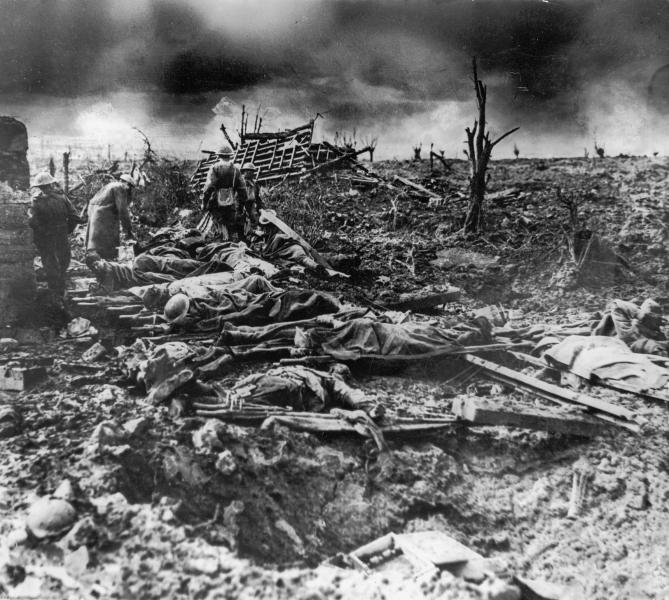
WWI was one of the most dramatic moments throughout world history. Uses of trench warfare seemed to be a useless and fearful military tactic as lines of soldier lay next to each other, cramped in small crevasses, while the enemies (Germans) are attempting to annihilate their foes (Americans, French, Britain, Russia, and Italy) with their newly found technological machine, the machine gun. This weapon simply devastated anybody who stands in its way with its rapid firing rate, giving it an advantage to the weapons that constantly needed to be reloaded. Though the war was stalemate, there were still problems growing within the trenches, diseases developed as rodents scurried through the tight spaces, and the decaying of corpses, leaving horrendous images in the minds or soldiers. Many soldiers of the war witnessed their comrades getting torn into pieces from gunfire or mines, seeing them die right in front of their eyes scarred their mentality; eventually leading to PTSD. Meanwhile at their home country, including America, nationalism grew rapidly as propaganda encouraged young minds to fight and die for their country by enlisting in the war.

The battle at Passchendaele. Photo by Adam Hochschild.
Those soldiers who were in the war and began to write their experiences were known as the “Lost Generation”.  An author named Wilfred Owen wrote a poem, Dulce Et Decorum Est (Sweet and Proper), about his experience during the war, giving specific imagery such as, “He comes at me, guttering, choking, drowning.” Giving explicit details about his comrades and other soldier being killed in the line of duty, expressing the emotions he possessed during the time through his poem, giving a fearful and dramatic tone. I personally felt this way reading this, as if I was in the moment Wilfred was in.

Modernism came during the 19th and early 20th century, mainly in Europe and North America. It is characterized by a self-conscious break with traditional styles of poetry and verse. The Modernist literary movement was driven by the desire to disregard traditional modes of representation and express the new sensibilities of their time. Thinkers such as Sigmund Freud and Karl Marx questioned the rationality of mankind, questioning it and seeing what it does in society.

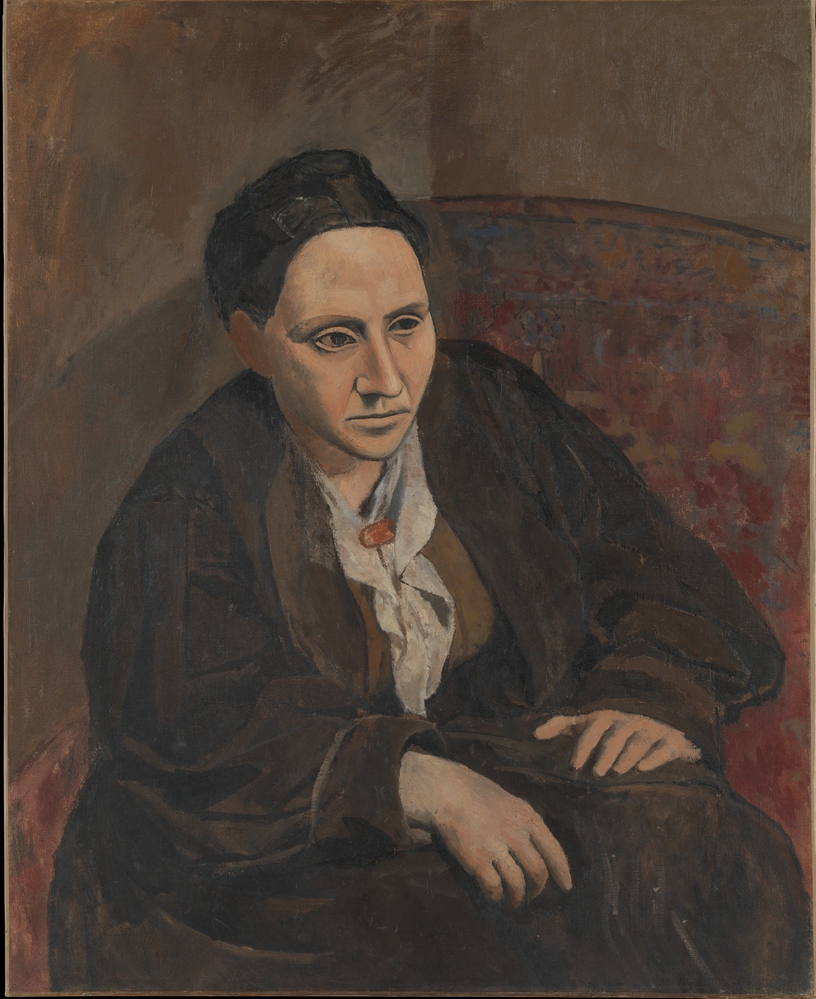
Gertrude Stein was an American Modernist writer who wrote unusual things, such as the autobiography of her partner, Alice B. Tokas. It’s unusual in that, she wrote about an autobiography, (basically a story about you) about another person. She also collected various Modernist arts and placed it all around her house, which kind of became a museum of Modernist art. Gertrude basically had “hangouts” at her salon, where many famous artists came and mingled. It’s where Picasso and Matisse met, which began their lifelong friendship.
Pablo Picasso, Portrait of Gertrude Stein.


Jazz came during the early 20th century; this type of music was mainly improvised while playing, and was not as well-constructed as classical music. Sidney Bechet was an American jazz saxophonist, clarinetist, and composer who was one of the first important soloists in jazz. Bachet recorded many works such as “Wild Cat Blues” and “Kansas City Man Blues”.  I found it interesting that Bachet interpreted and played each of his works uniquely and with outstanding creativity, which takes a large amount of work to accomplish. There was more freedom in jazz by allowing each musician  to have solos so that they are basically the “hero” of the song, giving more energy into  it.
0 comments

How can a WAR make something SO beautiful????

"I have been in the trenches again and I am one of the very few who is still alive and haven't a scratch on me. My regiment the 106th Infantry is wiped out. How I ever got out alive is more than I can tell. My Sargent, my corporal, my squad all got it but me, even my Lieutenant was wounded three times. The boys of the line companies got to their objective which was the Hindenburg Line, held it and the few that was left smashed the Hindenburg Line the next morning and kept going on."(Peter Schaming, Jr.). 
 
Wikimedia commons: John Roberts
World War I 
Hello bloggers, my name is Roynell Anderson, and that was the introduction of Mr. Schaming's autobiography about World War 1. Peter Schaming was living in Paris during the time of World War 1 and shared his experiences with Citizen Soldiers, a website that haves different autobiography of surviving soldiers from WW1. This isn't the only story about the horrible-shocking events that happened. Some other stories tell about people that came back from the war with missing legs, missing arms, and had shell shock (also known as posttraumatic stress disorder.) As you can see war wasn't like a walk in the park. It was horrible and it had an negative impact on the French people. People started to drink and stop going churches: welcome to the lost generation. 
The Lost Generation 
 "What are all the clocks for?" she asked.  "They show the hour all over America." "Don't kid me."  
We turned off the Avenue up the Rue des Pyramides, through the traffic of the Rue de Rivoli, and through a dark gate into the Tuileries. She cuddled against me and I put my arm around her. She looked up to be kissed. She touched me with one hand and I put her hand away. 
Wikimedia Commons:Frank Thompson 
 
"Never mind."  "What's the matter? You sick?" "Yes."  "Everybody's sick. I'm sick, too." We came out of the Tuileries into the light and crossed the Seine and then turned up the Rue des Saints Pères. "You oughtn't to drink pernod if you're sick." "You neither."  
"It doesn't make any difference with me. It doesn't make any difference with a woman."(Ernest Hemingway) 
Welcome to the lost generation, a time period where you can confuse people with your writing and get away with it. It was also the time to drink like there is no tomorrow. That's probably why a lot of people died during this the lost generation. "The Sun Also Rises" by Ernest Hemingway, shows a great example of the lost generation. During the story the author writes about meeting a girl that he have no connection with. During that time, people would write about this and will find a way to make their stories sound interesting by hooking up with girls that where younger than them. The lost generation is similar to the roaring twenties because during the roaring twenties, people was drinking more and changed the way Americas see women's views. 
If I got a chance to go back in time, I would go to the time of the lost generation, hands down. The lost generation seems like a fun time in history to go visit. It interested me that the French was able to turn a negative into a positive. After fighting in the war, the lost generation was a time for Paris to have fun and don't care about what people say. I wish that America can be like the lost generation. For now, I just have to keep on dreaming and watch Midnight in Paris and The Great Gatsby.   
-Roynell Anderson
 
;